Termites can cause serious damage to a property while remaining hidden from view. A room may look perfectly normal, the garden may be well maintained and the timber may appear sound on the outside. Behind a wall lining, inside a door frame or beneath a floor, however, concealed termite activity may already be developing.
For homeowners in Perth and surrounding areas of Western Australia, understanding termite behaviour is an important part of looking after a property.
Termites are not limited to neglected homes or buildings with obvious maintenance problems. They can enter well-maintained properties when suitable conditions and access points are present. Moisture, susceptible timber, concealed construction gaps and changes around the building can all influence the risk.
The difficulty is that termite activity is not always easy to recognise. Some warning signs are visible, while others may be mistaken for ordinary building wear, moisture damage or movement.
Knowing what to look for, what not to disturb and when to arrange a professional termite inspection can help homeowners respond more confidently.
Why Termites Are a Concern for Perth Homeowners
Several termite species occur in Western Australia. Subterranean termites are particularly important in residential property management because they can travel through soil and concealed pathways to reach timber.
They generally avoid open exposure and maintain protected routes between their colony and food sources. This behaviour allows them to feed inside timber or behind building surfaces without being noticed immediately.
The damage may affect structural or non-structural timber, depending on the species, location and extent of activity. Door frames, skirting boards, flooring, roof timbers, built-in timber components and external structures may all need consideration during an inspection.
Termite activity can occur throughout the year. Warmer weather may make swarming activity more noticeable, but the absence of flying termites does not mean a property is free from termites.
Common Signs of Termite Activity in a House
Termites can leave different types of evidence depending on where they are feeding and how they are accessing the building.
Mud Tubes on Walls or Foundations
One of the recognised signs of subterranean termite activity is a mud shelter tube.
These narrow tunnels may appear on brickwork, concrete, foundations, piers or other surfaces. They provide termites with a protected route that helps maintain the conditions they need while travelling between the soil and a food source.
Not every mud-like mark is a termite tube. However, if you find a suspected shelter tube, avoid breaking it open. Photograph its location and arrange an inspection.
Hollow-Sounding Timber
Termites may consume timber internally while leaving parts of the outer surface intact.
As a result, affected timber can sound hollow when lightly tapped or may feel weaker than expected. Door frames, skirting boards, window frames and other timber features deserve attention if they show unexplained changes.
Do not use force to test suspected damage. A professional can assess the timber without unnecessarily disturbing possible termite activity.
Discarded Wings Near Windows and Lights
During a swarming event, reproductive termites known as alates leave an established colony.
After landing, they may shed their wings. Small piles of similar-looking wings near windows, doors, outdoor lights or other illuminated areas can be a sign that termite activity is occurring nearby.
Finding wings does not prove that termites have entered the building. It is a reason to record where they appeared and consider a professional inspection.
Changes to Paint, Plaster or Wall Surfaces
Termite activity behind wall linings can sometimes be associated with changes to the visible surface.
Discolouration, bubbling paint, rippling or unusual marks may deserve attention, especially when there are other signs of possible activity.
These symptoms can also result from plumbing leaks, humidity or building movement. Their cause should be investigated rather than automatically attributed to termites.
Doors and Windows That Suddenly Stick
A door that becomes difficult to close may have several explanations, including changes in humidity, building movement or damaged timber.
If the change is unexplained and occurs alongside hollow-sounding timber, mud tubes or other warning signs, arrange an inspection to determine whether termites may be involved.
Damaged Timber Around Outdoor Structures
Termite checks should not stop at the main house.
Decks, pergolas, fences, timber retaining structures, garden edging, sheds and other outdoor timber features may also be exposed to termite activity.
Pay attention to timber in contact with soil, areas that remain damp and places hidden by dense vegetation or stored materials.
Where Termites May Enter a Perth Property
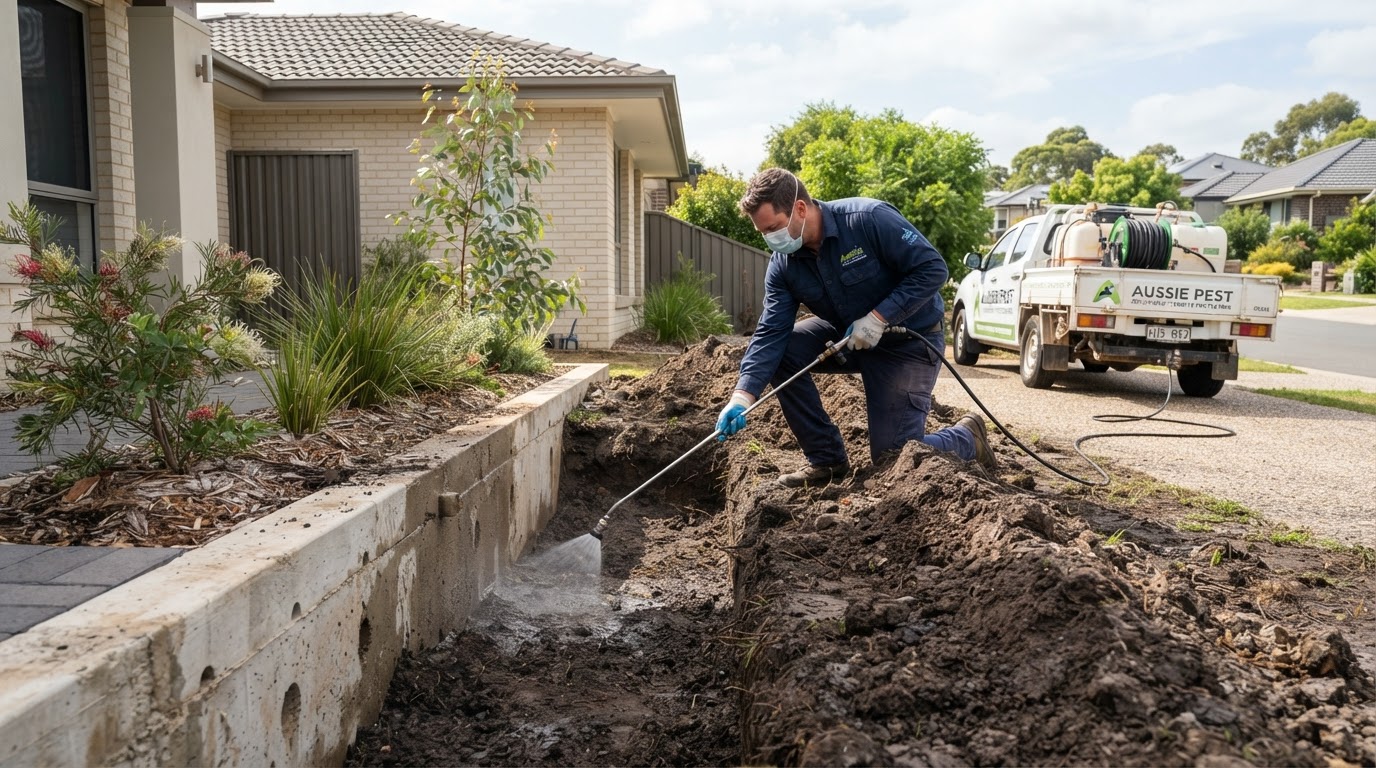
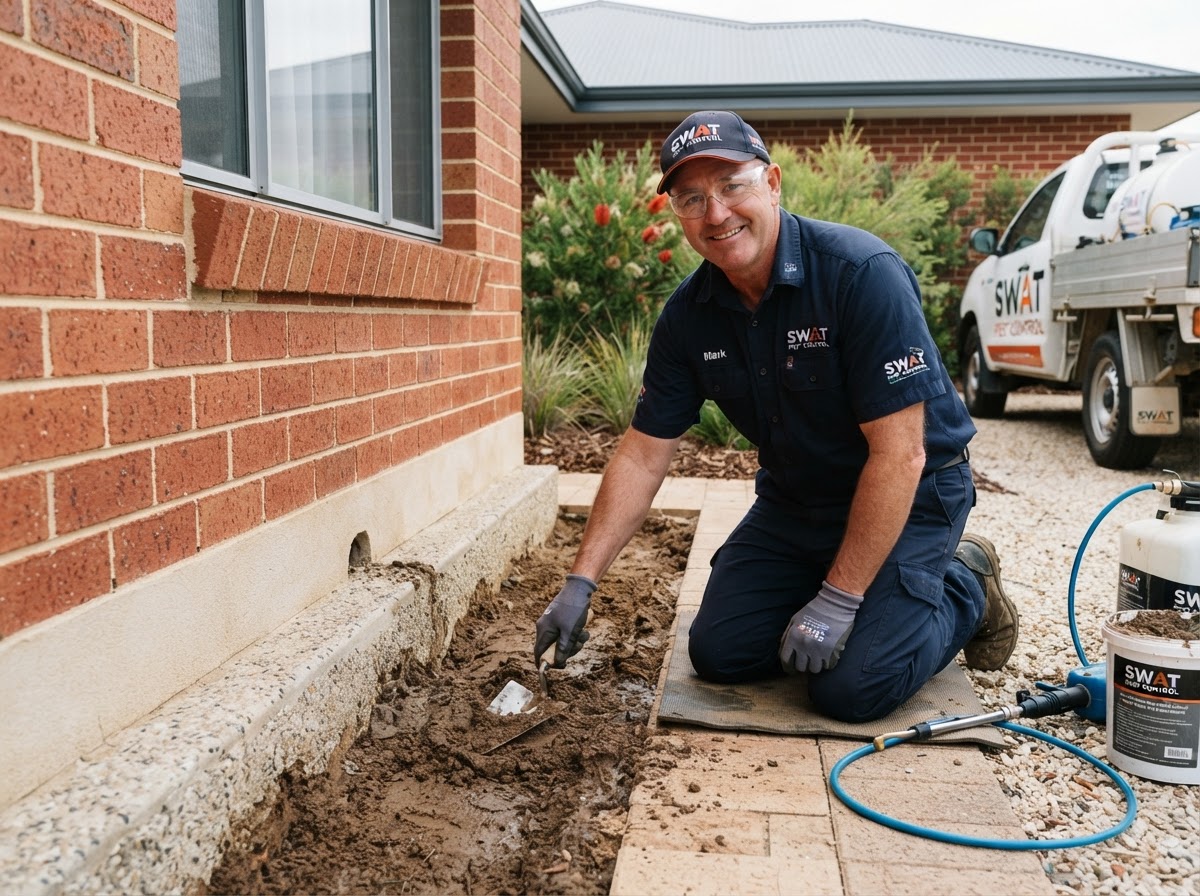
Subterranean termites can access buildings through a range of concealed pathways.
They may travel through soil around foundations, gaps or joints in building elements, service penetrations and areas where inspection visibility is restricted.
Timber in direct contact with soil can also create conditions that make concealed access easier. Garden beds, stored timber and landscaping close to the building may cover important areas that should remain visible.
A termite management system is designed to reduce the risk of concealed entry, but it cannot guarantee that termites will never reach the building. Some colonies may find alternative routes around or through areas that require inspection.
This is one reason why the condition of the entire property matters, not just the visible perimeter.
What Conditions Can Increase Termite Risk?
Termite risk is influenced by the interaction between the building and its surroundings.
Persistent Moisture
Leaking pipes, dripping taps, damaged downpipes and poor drainage can create damp conditions around a property.
Subterranean termites rely on moisture, so persistent damp areas deserve attention. Repairing leaks and improving drainage can help reduce unnecessary moisture, although it does not remove an existing colony.
Hidden Timber and Garden Materials
Stored timber, old stumps, untreated wooden structures and garden materials can provide susceptible material around the property.
Keep these items away from external walls where practical. Avoid covering inspection areas with mulch or soil and make sure vegetation does not prevent a clear view of the building.
Blocked Ventilation and Inspection Areas
Blocked subfloor vents or restricted access can make it harder to identify changes in accessible areas.
Where a building has a subfloor, roof space or other inspection zones, keeping appropriate access available can help a professional carry out a more useful assessment.
What Should You Do If You Find Termites?
Discovering suspected termites can be worrying, particularly when you do not know how far the activity has spread.
The first step is to avoid disturbing the affected area.
Do not spray suspected termites with household insecticide, break open their mud tubes or remove damaged timber before professional advice. Disturbing the termites may cause them to retreat into concealed locations and make the investigation more difficult.
Take clear photographs, note the location and record when you first noticed the evidence. If you have previous inspection reports or treatment records, keep them available for the inspector.
Arrange an assessment with a licensed pest management professional so the activity and any associated damage can be investigated.
The right response depends on what is found. A professional should explain whether there is evidence of active termites, what areas are affected and which treatment or monitoring options are suitable.
How a Professional Termite Inspection Helps
A professional termite inspection is designed to assess accessible parts of the property for evidence of termite activity, timber damage and conditions that may increase risk.
Depending on the construction and access available, the inspection may consider internal rooms, external walls, roof spaces, subfloor areas and external timber structures.
The inspector may also ask about previous termite activity, earlier treatments, building alterations and existing termite management systems.
This background is important because an isolated sign does not always show the full extent of a problem. A suitable inspection considers the evidence in context and explains any limitations caused by inaccessible areas.
The findings should help the homeowner understand the property's condition and what action may be appropriate.
What Happens After an Inspection?
If an inspection confirms termite activity, any treatment is selected according to the findings rather than assumed. Management may involve treating active termites, investigating the colony, establishing or repairing a barrier, or using a baiting approach — each suited to different conditions and covered in our guides to termite damage and active nests and to chemical barriers versus baiting.
For a homeowner who has just noticed warning signs, the key point is not to disturb the area, to record what was found, and to let the inspection determine what — if any — treatment is appropriate.
Why Ongoing Inspections Still Matter
Identifying activity once does not make a property permanently free from termite risk. Termites may return, new colonies may develop nearby, and changes around the building can alter the conditions that first allowed access. Regular professional inspections help catch new signs early; our guide to annual termite inspections explains why that routine remains important.
Protect Your Property With the Right Information
Termite activity can be difficult to identify without a proper assessment. A mud tube, discarded wings or damaged timber may provide an important clue, but the evidence needs to be interpreted carefully.
If you have noticed possible termite signs in your Perth home, avoid disturbing the area and arrange a professional inspection.
Termite Control Perth WA can help you discuss termite inspections and suitable management options for your property. Call (08) 9468 8054 or email info@termitecontrolperthwa.com.au to find out more.
Frequently Asked Questions
How do I know if my Perth home has termites?
Possible signs include mud shelter tubes, hollow-sounding timber, discarded wings and unexplained timber damage. These signs need professional assessment because other conditions can sometimes look similar.
Are termites active all year in Perth?
Yes. Subterranean termites can remain active throughout the year. Swarming may become more noticeable during particular warm and humid conditions, but activity is not limited to spring or summer.
Can termites enter a clean and well-maintained home?
Yes. Termite activity is not proof that a home is dirty or poorly maintained. Termites can reach properties through concealed pathways and suitable environmental conditions.
Should I remove a termite mud tube?
Avoid disturbing suspected termite workings before professional assessment. Photograph the area and arrange an inspection.
Can termites damage a house without being seen?
Yes. Termites often feed inside timber or behind building surfaces. Visible damage may not appear until activity has been present for some time.
Does termite treatment mean termites will never return?
No treatment can guarantee permanent freedom from termite activity. Ongoing inspections and appropriate property maintenance remain important.