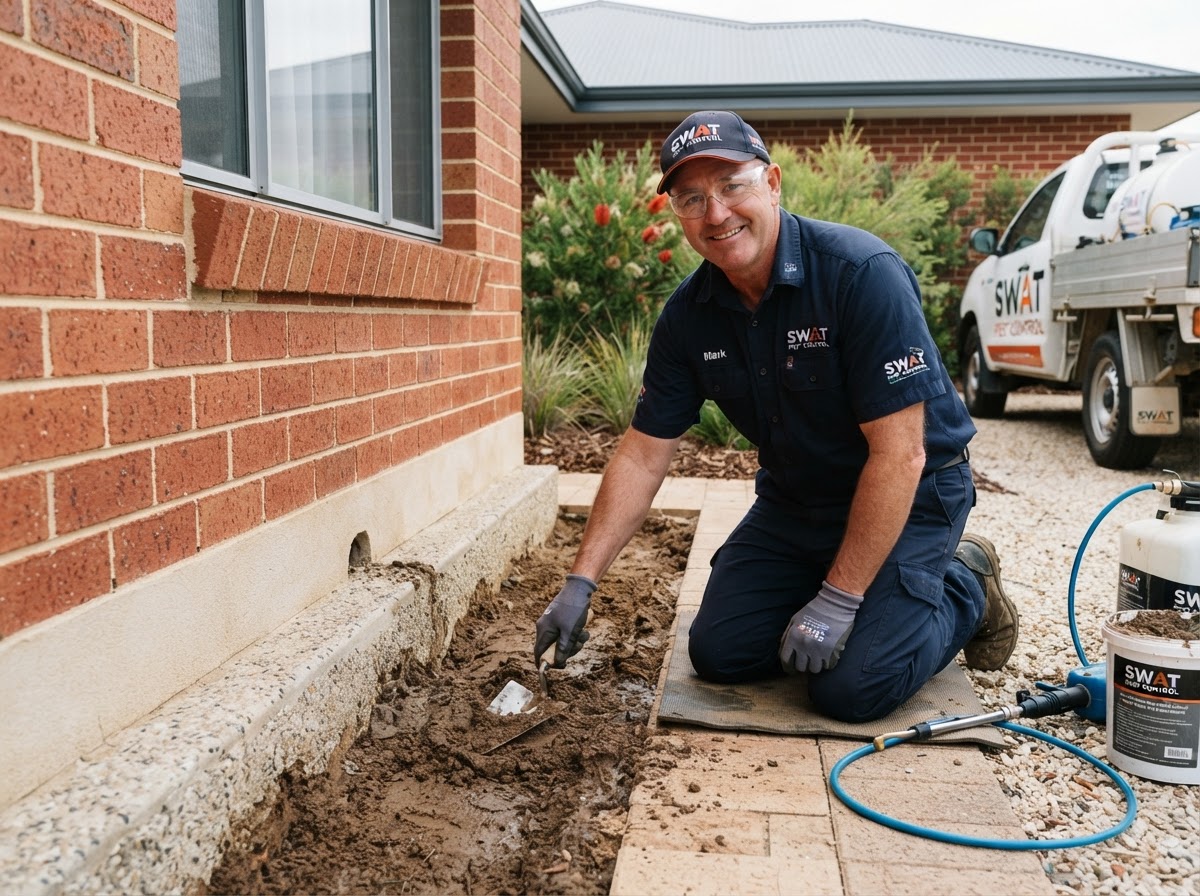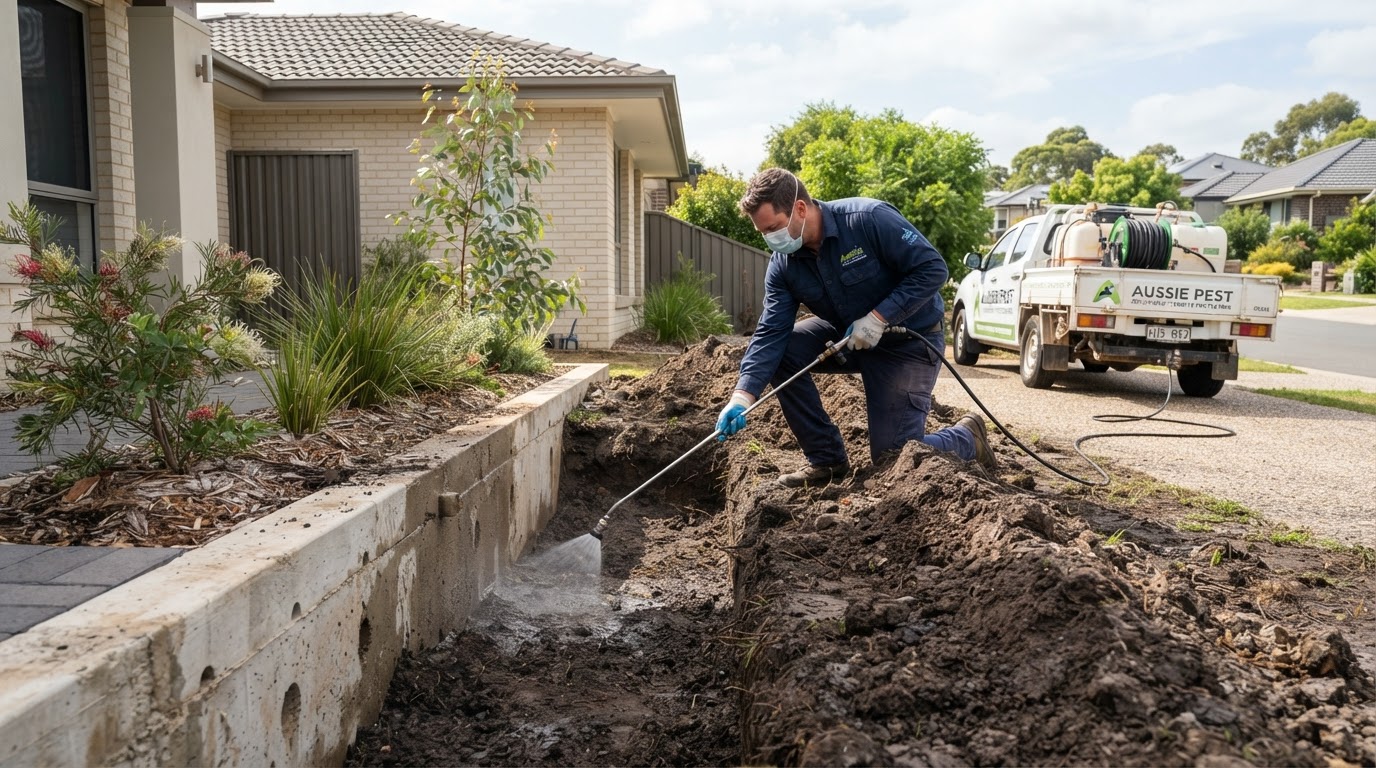
After a period of dry weather, rain can change the conditions around a property quite quickly. Gardens become damp, soil moisture increases and outdoor timber may remain wet for longer. When warmer weather follows, homeowners sometimes begin noticing flying termites, discarded wings and other signs of termite activity.
It is natural to wonder whether rain causes termites to appear or whether warm weather makes an existing infestation worse.
The relationship is more complicated than that. Termites can remain active throughout the year, often hidden beneath the ground or inside timber. Seasonal changes influence their environment, movement and reproductive behaviour, but rain alone does not create a termite colony.
For Perth homeowners, understanding how rainfall, temperature and moisture interact can help explain why termite activity sometimes becomes more noticeable during particular periods.
Why Rain and Warm Weather Matter to Termites
Subterranean termites depend on suitable moisture conditions to survive. Their soft bodies are vulnerable to drying out, which is why they usually travel through soil, enclosed galleries and protected shelter tubes rather than crossing exposed surfaces.
Rain can increase soil moisture and affect the conditions around termite colonies. It may also influence the availability and condition of timber and other cellulose materials used as food.
Warm weather can influence termite development and activity, although different species respond differently to environmental conditions.
When suitable moisture and temperature conditions occur together, termite activity may become more noticeable around gardens, trees, fences and buildings.
This does not mean every rainy period will result in a termite infestation. It means homeowners should understand the conditions that may make termite activity more apparent.
What Happens to Termites After Heavy Rain?
Rain affects the ground and surrounding environment in several ways.
Changes in Soil Moisture
Subterranean termites live in underground colonies and use soil as part of their protected environment.
When dry soil becomes moist after rainfall, conditions may become more suitable for movement and foraging in some areas. Termites may also continue using established underground pathways that were less noticeable during dry periods.
However, excessive waterlogging can also disturb termite activity. Different species and colonies respond differently to environmental conditions.
Increased Moisture Around Buildings
Heavy rain can reveal drainage problems that were not obvious during dry weather.
Blocked gutters, leaking downpipes, poor surface drainage and water collecting near foundations can create persistent damp areas.
These conditions deserve attention because moisture around a building can contribute to an environment favourable to termites and other timber-related problems.
Changes Around Garden Timber
Rain can keep old sleepers, timber edging, fence posts and stored wood damp for extended periods.
If these materials are close to the building, they may provide suitable food sources or concealed areas where termite activity can go unnoticed.
Homeowners should pay attention to timber structures in gardens, particularly where vegetation and mulch make inspection difficult.
Why Flying Termites Appear After Warm Weather
One of the most noticeable signs of seasonal termite activity is the appearance of flying termites.
These insects are called alates or reproductive termites. They develop within mature colonies and leave during suitable conditions to establish new colonies.
Swarming is often associated with combinations of temperature, humidity, rainfall and other environmental signals. The exact timing differs between species and locations.
What Happens During a Termite Swarm?
When reproductive termites leave a colony, they may gather around lights, windows and other illuminated areas.
After landing, they shed their wings. A successful reproductive pair may then attempt to establish a new colony in suitable conditions.
Many flying termites do not successfully establish a colony. Their presence does not automatically mean that a nearby house is infested.
However, repeated swarming around a property or finding discarded wings indoors deserves attention.
Are Flying Termites the Same as Flying Ants?
No. Flying ants and flying termites can look similar from a distance, but there are visible differences.
Termites generally have a broad waist, straight-looking antennae and two pairs of wings of similar length. Flying ants usually have a narrow waist, elbowed antennae and forewings that are longer than their hindwings.
Correct identification matters because the insects have different biology and management requirements.
If you are unsure what you have found, photograph the insects or wings and arrange professional identification.
Why Termites Can Become More Noticeable Around Perth Homes
Perth properties have different construction styles, garden layouts and environmental conditions. Some features may make termite activity easier to conceal.
Older homes may have established trees, timber fences and garden beds close to external walls. Properties with suspended floors may contain subfloor areas where access is restricted.
Newer homes can also have termite risks. Concrete slabs, extensions, plumbing penetrations, landscaping and changes to the original building perimeter can all influence where termites may gain access.
Rain can highlight problems such as leaking pipes and poor drainage, while warm weather may coincide with swarming activity.
This combination explains why homeowners sometimes notice termite signs after seasonal weather changes, even when the colony may have existed nearby for a much longer period.
Warning Signs to Look For After Rain
A careful property check after wet weather can help identify conditions that need attention.
Mud Shelter Tubes
Look for narrow earthen tunnels along foundations, brickwork, piers and other surfaces. These may provide protected pathways for subterranean termites.
Do not break open suspected tubes to see whether termites are inside. Leave the area undisturbed and arrange an inspection.
Discarded Wings
Check window sills, doorways, outdoor lights and areas near glass doors for small piles of discarded wings.
Record where they were found. Their presence may indicate nearby swarming activity, although it does not confirm that termites have entered the house.
Damp Timber and Drainage Problems
Inspect accessible areas around downpipes, garden taps, irrigation systems and outdoor timber structures.
Persistent dampness should be corrected, whether or not termites are present. It can contribute to timber deterioration and make the surrounding area more favourable for termite activity.
Unexplained Timber Damage
Pay attention to soft timber, hollow-sounding surfaces and unusual deterioration around doors, windows and external structures.
Do not assume that every damaged area is caused by termites. A professional assessment can help distinguish termite damage from moisture-related decay and other building problems.
Does Rain Make Termites Enter Your House?
Rain does not automatically force termites into a home.
Termites generally forage in search of suitable food and favourable environmental conditions. Their movement may change as soil moisture and other conditions change, but building entry depends on available access routes and the property's termite management arrangements.
A house with an existing termite barrier may still require inspection because barriers can be disturbed or bypassed.
New plumbing, garden beds, paving, excavation and extensions can also affect the building perimeter and create conditions that deserve assessment.
The important point is not to assume that rain itself has caused an infestation. Instead, use seasonal changes as an opportunity to review the property's condition.
How to Reduce Termite Risk During Wet and Warm Weather
Homeowners can take several practical steps to reduce avoidable risks.
Make sure downpipes direct water away from the building and repair leaking outdoor taps or irrigation lines. Clear gutters and investigate areas where water repeatedly collects.
Keep garden mulch, soil and vegetation from concealing important inspection areas. Avoid storing firewood or unwanted timber against external walls, and remove decayed timber where practical.
Check that subfloor vents are not blocked and that access points remain available for inspection.
If your property has an existing termite management system, keep the installation documents and previous inspection reports. These records can help a professional understand the property's protection history.
Why a Professional Inspection Is Important After Seasonal Changes
A homeowner can identify obvious maintenance issues, but concealed termite activity is more difficult to assess.
A professional termite inspection considers accessible building areas, external structures, visible timber and potential entry points. It can also help identify conditions that may increase the risk of termite attack.
Western Australian government guidance recommends professional termite inspections at least annually. Homeowners should also arrange an assessment sooner when they notice suspicious signs.
If termites are found, treatment should be selected according to the inspection findings rather than based on the weather or season alone.
Stay Prepared for Perth's Changing Weather
Rain and warm weather can make termite activity more noticeable, but the risk does not begin and end with a particular season. Termites can remain active throughout the year, and a colony may exist for a considerable period before homeowners notice any evidence.
Maintaining drainage, keeping inspection areas visible and arranging regular professional inspections are practical ways to look after a property.
If you have noticed flying termites, discarded wings or possible timber damage, it is worth finding out what is happening before making assumptions.
Termite Control Perth WA can help homeowners discuss termite inspections and management options. Call (08) 9468 8054 or email info@termitecontrolperthwa.com.au for further information.
Frequently Asked Questions
Do termites come out after rain in Perth?
Rain can change soil moisture and environmental conditions, which may influence termite movement and activity. However, termites can remain active throughout the year.
Why are flying termites attracted to lights?
Reproductive termites may gather around artificial lights during swarming events. Finding them near lights can indicate nearby termite activity, but it does not automatically prove that the building is infested.
Does heavy rain kill termites?
Heavy rain and waterlogging can disturb some termite activity, but they do not reliably eliminate an established colony. Termite colonies may remain protected in underground or concealed locations.
Are termites more active in summer in Western Australia?
Warmer conditions can influence termite development and swarming behaviour. However, subterranean termites can remain active during other seasons too.
Should I arrange an inspection after seeing flying termites?
If you notice repeated swarming, discarded wings indoors or other possible signs of termite activity, a professional assessment is sensible.
Can damp soil attract termites to my house?
Moisture can contribute to favourable conditions for subterranean termites. Persistent dampness near the building should be corrected and assessed as part of general property maintenance.