Termite damage can be one of the most difficult problems for a homeowner to recognise early. Unlike damage caused by many other pests, termite activity often develops behind the visible surface of timber, inside wall cavities or beneath floors.
A door frame may appear intact while termites feed inside it. A timber support may retain its outer shape even when its internal structure has been weakened. By the time visible damage becomes obvious, the infestation may have been present for some time.
Understanding how termites damage timber, where colonies may be located and what happens during professional treatment can help homeowners make informed decisions.
In Perth and across Western Australia, subterranean termites are an important consideration for residential properties. They live in colonies and forage through protected routes in search of cellulose-based materials, including timber used in buildings.
The correct response depends on the evidence found during an inspection. Treating one visible area without understanding the wider infestation may leave other activity unaddressed.
How Termites Cause Damage to Timber
Termites feed on cellulose, a natural material found in wood and other plant-based substances.
Inside a colony, different termite groups perform different roles. Workers are responsible for much of the feeding and food collection, while soldiers defend the colony and reproductive termites help establish new colonies.
Subterranean termites typically move through soil or protected shelter tubes. When they reach a suitable timber source, they can feed internally while maintaining a protected environment.
This feeding behaviour explains why timber may look relatively normal from the outside despite having substantial internal damage.
Damage Inside Structural Timber
Timber used in roof structures, flooring systems, framing and support components can be affected when termites gain access.
The seriousness of the damage depends on the location, the amount of timber affected and whether the component performs an important structural function.
A damaged decorative timber feature is not necessarily equivalent to damage to a load-bearing component. Any concern involving structural timber should be assessed by an appropriately qualified professional.
Damage to Doors, Windows and Internal Features
Termites may also affect door frames, window frames, skirting boards, built-in cupboards and other timber features.
Homeowners sometimes notice changes in doors or windows before recognising any other evidence. These changes can have several causes, so they should not automatically be attributed to termites.
Where unusual changes occur alongside other warning signs, a professional inspection can help establish what is happening.
Damage to Outdoor Timber Structures
The main house is not the only part of a property that may be affected.
Pergolas, decks, fences, retaining timbers, sheds and garden structures can contain susceptible timber. These features may also provide concealed locations where termite activity can develop.
Keeping these areas visible and maintaining separation between timber and soil where practical can support better property management.
Warning Signs of Termite Damage
Termite activity can produce different symptoms depending on the species and location of the infestation.
Mud shelter tubes are one of the recognised signs of subterranean termites. They may appear on foundations, masonry, piers or timber surfaces.
Other possible signs include hollow-sounding timber, unexplained deterioration, damaged paint surfaces and discarded wings near windows or lights.
Some homeowners also notice unusual softness in timber or changes around skirting boards and door frames.
None of these signs should be considered conclusive on its own. Moisture, fungal decay and ordinary building deterioration can sometimes produce similar symptoms.
A professional assessment is the best way to understand whether termites are responsible.
What Is an Active Termite Nest?
A termite nest is the central living environment of a colony, where termites maintain the conditions needed for survival and reproduction.
Depending on the species, nests may be located underground, within trees, inside timber or in other protected locations.
Subterranean termites can travel considerable distances through underground galleries and shelter tubes while foraging for food.
This means the place where termites are seen feeding is not necessarily the location of the nest.
For example, finding termites in a door frame does not establish that the colony is directly beneath that door. Workers may have travelled from another location through concealed routes.
Understanding this distinction is important when planning treatment.
How Professionals Investigate Active Termite Activity
A suitable investigation begins with identifying the evidence and understanding the property.
The professional may examine visible shelter tubes, affected timber, accessible foundations and surrounding structures. Previous termite reports and treatment records can also help establish whether activity has been identified before.
Where appropriate, specialist detection equipment may assist with investigating suspicious areas. Equipment can support an assessment, but it does not replace the need for professional judgement and an understanding of the building.
Assessing the Extent of the Activity
The first objective is to understand where termites are active and which parts of the building may be affected.
An inspection may identify current activity, previous damage and conditions that could allow further access.
Restricted areas should be recorded because an inaccessible roof space, wall cavity or subfloor section cannot be assumed to be free of termites.
Considering the Location of the Nest
Locating a nest can sometimes help with treatment planning, but it is not always possible.
Subterranean colonies may be hidden underground or within structures that cannot be accessed without significant disturbance. In other cases, evidence may be sufficient to plan a management approach without locating the central nest.
A professional should explain what has been identified and whether further investigation is appropriate.
How Are Active Termites Treated?
There is no single treatment suitable for every infestation. The appropriate method depends on the termite species, the location of activity, building construction and available access.
Direct Treatment of Accessible Activity
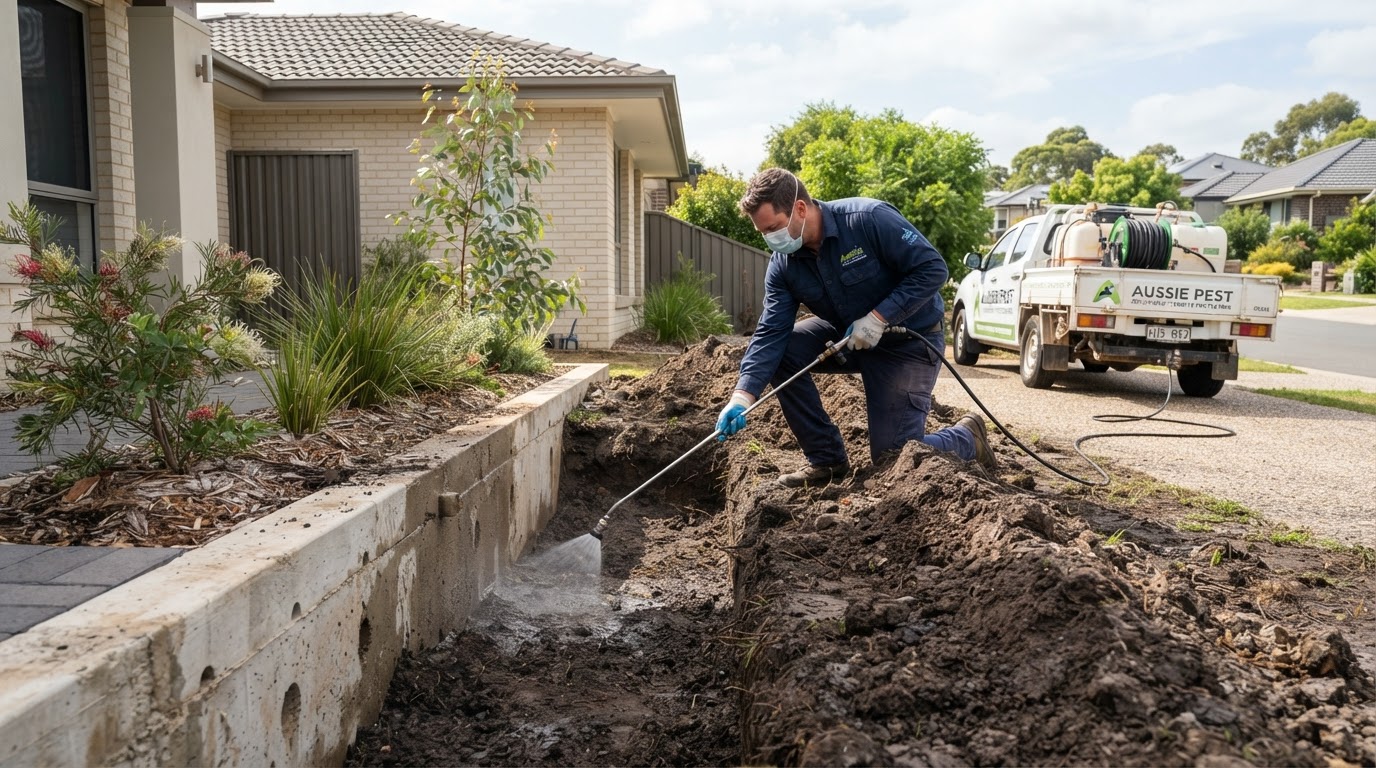
Where active termites are located in accessible timber or a suitable treatment area, a professional may recommend a targeted treatment.
The purpose is to address the identified activity in accordance with the selected product's approved label directions.
Treating one visible area does not necessarily mean the entire colony has been eliminated. Further assessment, monitoring or additional management measures may be required.
Chemical Soil Treatments
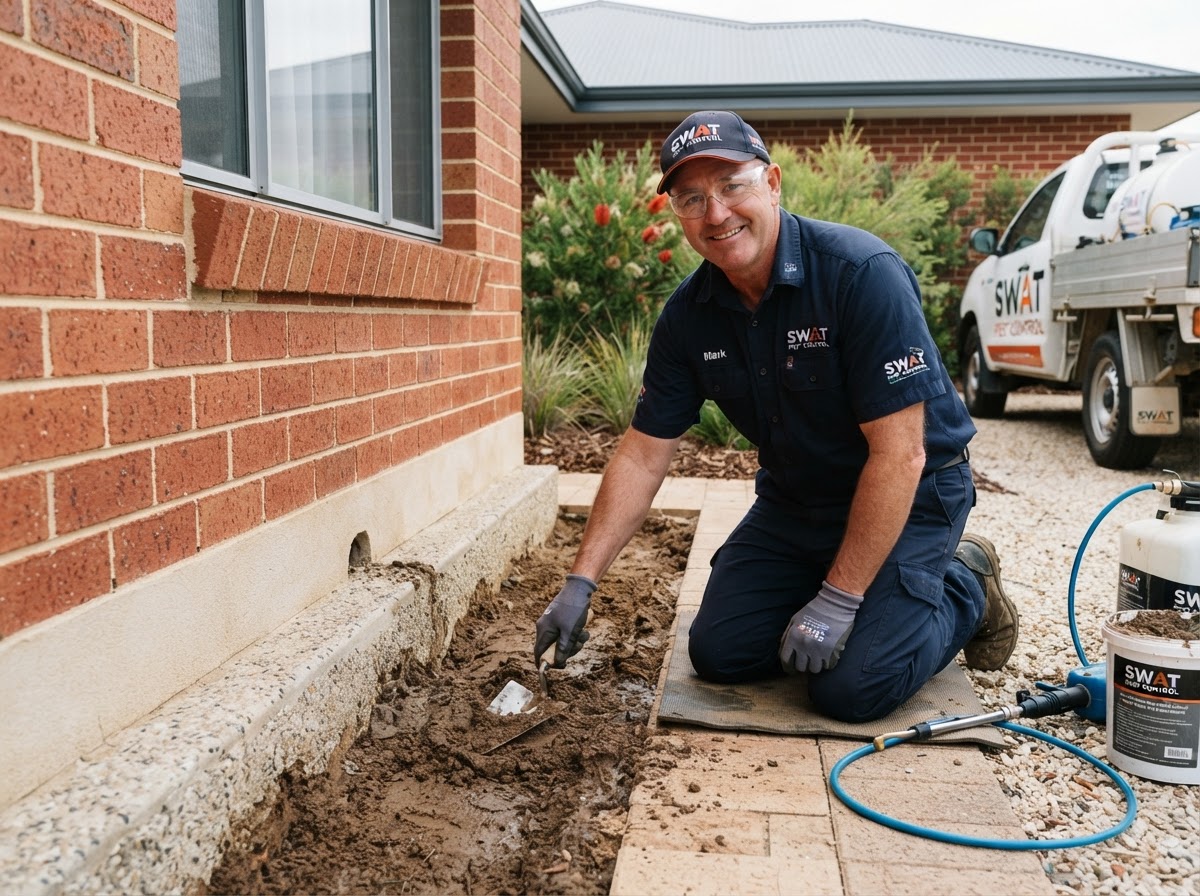
Chemical soil treatments are used in some termite management systems to establish a treated zone around relevant parts of a building.
The system must be selected and installed according to the property, soil conditions, construction details and product requirements.
Existing concrete, paving, service penetrations and building extensions may affect how treatment can be carried out.
A chemical treatment should not be recommended simply because termites have been found. The inspection should establish why the treatment is appropriate and which areas it is intended to address.
Termite Baiting Systems
Baiting systems use strategically placed stations containing materials designed to attract foraging termites.
When termites feed on a suitable bait, the active ingredient may be transferred through the colony through normal feeding and grooming behaviour.
The outcome depends on the species, bait system, colony behaviour and monitoring process. Baiting is not an instant treatment and should not be presented as a guaranteed method of eliminating every colony.
Stations require appropriate placement and ongoing inspection according to the system's instructions.
Nest Treatment Where Accessible
If a nest is located and can be accessed safely, direct nest treatment may form part of the management approach.
However, not every infestation has a nest that can be located. Even when one nest is treated, other colonies or future termite activity may remain possible.
This is why nest treatment is generally considered alongside inspection, property management and suitable preventative measures.
Why One Treatment May Not Be Enough
Termite colonies are complex, and visible activity does not always show the full extent of an infestation.
A treatment that addresses one affected timber component may not address termites travelling through another route. Similarly, treating one nest does not guarantee that a property is protected from other colonies.
A broader management plan may therefore consider active termite treatment, appropriate barrier systems, correction of conducive conditions and ongoing inspections.
Western Australian government guidance discusses integrated termite management rather than relying on a single measure in every situation.
The professional recommendation should explain the purpose of each measure and what homeowners should expect after treatment.
What Should You Do When You Find Termites?
If you discover live termites, mud tubes or suspected termite damage, leave the affected area undisturbed.
Avoid household sprays, breaking shelter tubes or removing damaged timber before professional advice. Disturbing the area may cause termites to retreat into concealed locations and make it harder to assess their activity.
Take photographs and record the location. If previous treatment records or inspection reports are available, keep them ready for the professional.
Arrange an inspection and ask for a clear explanation of the findings, recommended treatment and follow-up requirements.
If significant structural timber appears damaged, obtain an appropriate building assessment to understand whether repairs or additional safety measures are necessary.
Preventing Further Termite Problems
After an infestation has been investigated, homeowners should review the conditions around the property.
Repair leaking pipes and taps, improve drainage and keep soil or garden mulch from covering important inspection areas. Store firewood away from the house and remove unnecessary decayed timber.
Maintain access to subfloor vents and other areas that need to remain visible for inspection.
If the property has an existing termite management system, keep its documentation and ask whether any repairs, replenishment or modifications are required.
Regular professional inspections remain important after treatment because no single management method can guarantee that termites will never return.
Professional Termite Management in Perth
Termite damage should be approached carefully. Finding a damaged timber surface does not always reveal the full extent of the infestation, and treating visible termites without understanding the surrounding conditions may not provide an adequate long-term solution.
A professional assessment helps establish what is happening, which areas need attention and what management options are suitable for the property.
Termite Control Perth WA can help homeowners discuss termite inspections and treatment options. Call (08) 9468 8054 or email info@termitecontrolperthwa.com.au to discuss your concerns.
Frequently Asked Questions
Can termites destroy timber from the inside?
Yes. Subterranean termites often feed within timber while leaving parts of the outer surface intact. This can make damage difficult to recognise until it becomes more extensive.
Does treating visible termites kill the entire colony?
Not necessarily. Treatment of one visible area may not address the full colony or other concealed activity. Further investigation and management may be required.
Can an active termite nest always be located?
No. Some nests are concealed underground or within inaccessible structures. Treatment options can still be considered based on the evidence available.
Should I break open a termite mud tube?
No. Avoid disturbing suspected termite workings before professional assessment. Photograph the area and arrange an inspection.
Can termites return after treatment?
Yes. New colonies may develop nearby or termites may find alternative access routes. Ongoing inspections and suitable property maintenance remain important.
Does termite damage always mean the house is structurally unsafe?
No. The significance depends on which timber components are affected and how much damage has occurred. Structural concerns should be assessed by an appropriately qualified professional.