Discovering termite activity around a property can leave homeowners wondering which treatment will provide the most suitable protection. Two approaches often discussed are chemical termite barriers and termite baiting systems.
Both are used in termite management, but they work differently and are not interchangeable in every situation.
A chemical barrier involves establishing a treated zone in relevant soil areas around or beneath a building. A baiting system uses strategically positioned stations to attract foraging termites and deliver a suitable bait product.
The right choice depends on the type of termite activity, building construction, site conditions, existing termite management systems and the treatment objective.
For Perth homeowners, understanding these differences is important before agreeing to treatment. A professional assessment should come first so that any recommendation is based on the actual conditions at the property.
What Is a Chemical Termite Barrier?
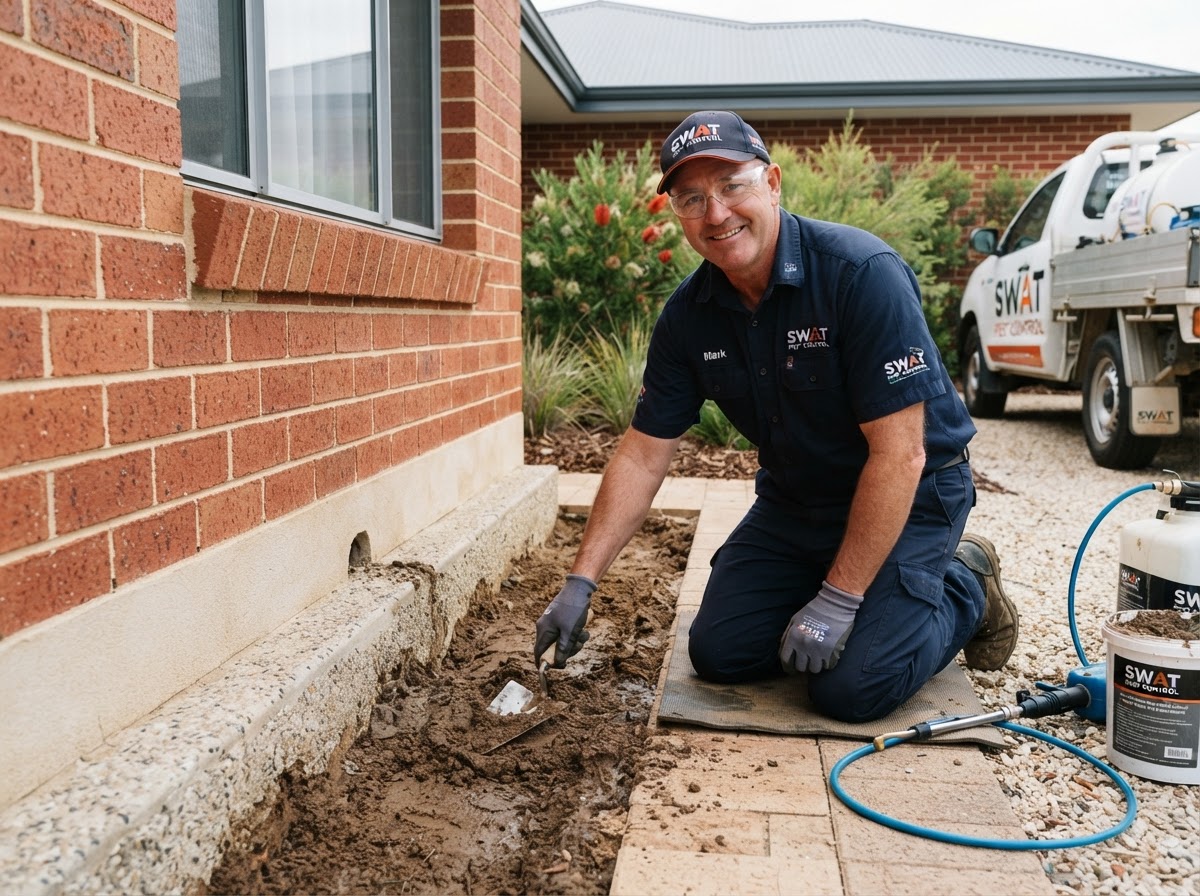
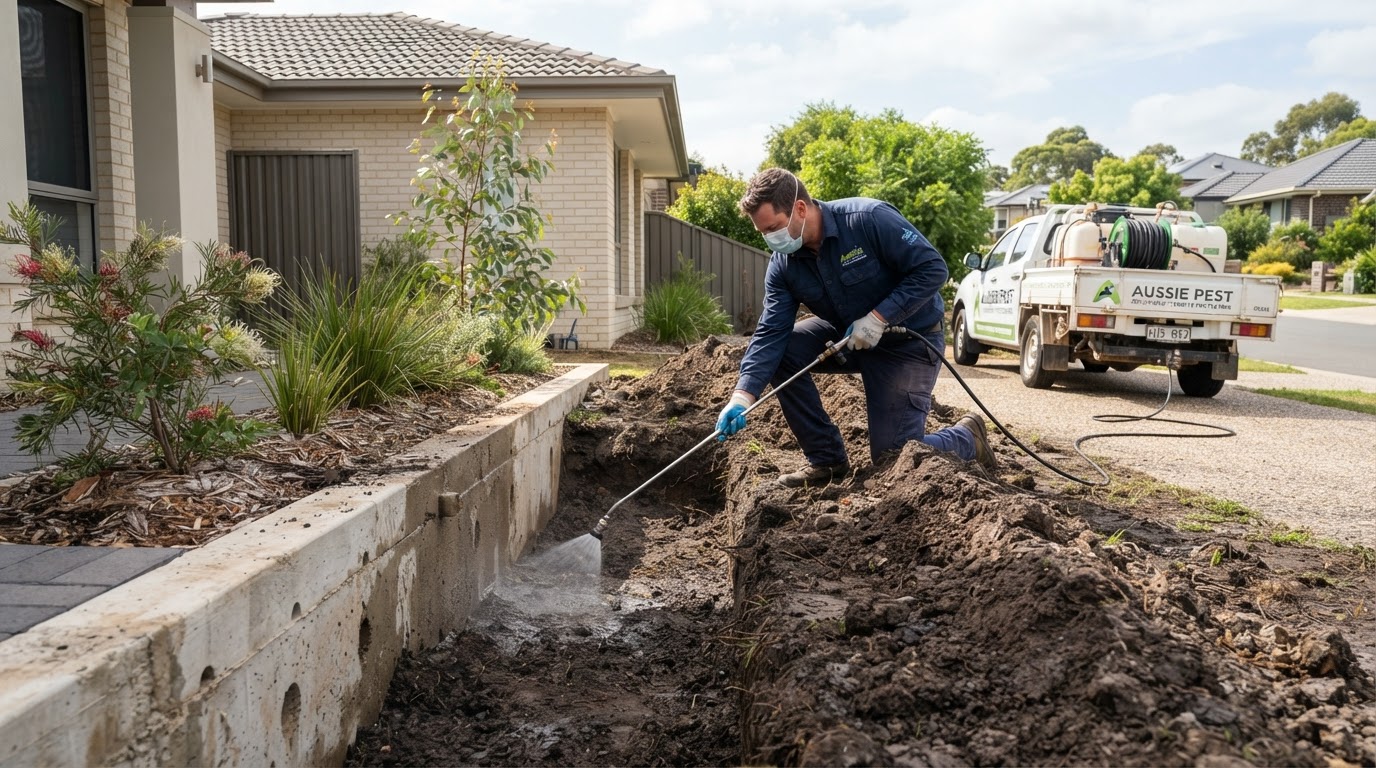
A chemical termite barrier is a treatment system designed to establish a treated zone in soil around relevant parts of a building.
Depending on the product and system, the treatment may be applied to soil around foundations, external walls, service penetrations or other suitable locations.
The objective is to help manage termite access to the structure through appropriately treated areas.
Chemical treatments used in termite management must be selected and applied according to their approved label directions, relevant requirements and site conditions.
How Chemical Barriers Work
Subterranean termites travel through soil and protected pathways while searching for food.
A suitably installed chemical treatment can establish a zone that helps manage termite entry around a building.
Different termiticides have different properties. Some products are designed to be transferred between termites through their normal social behaviour, while others work through different modes of action.
The product selected, application method and treatment coverage all matter.
A chemical barrier is not simply a surface spray around the outside of the house. It requires consideration of the construction, soil, access and continuity of the treatment zone.
Where Chemical Barriers May Be Used
Chemical management systems may be suitable for certain existing buildings where the property layout allows appropriate treatment.
Depending on construction, treatment may involve soil around the perimeter, areas beneath slabs or locations near service penetrations.
Concrete paths, paving, extensions and existing structures can affect how a continuous treatment arrangement is established.
The inspector should explain which areas can be treated, where access is restricted and whether additional measures are required.
What Is a Termite Baiting System?
A termite baiting system uses specially designed stations placed in areas where termite foraging activity may occur.
The stations contain monitoring materials or an approved bait product, depending on the system and stage of the management program.
When termites locate and feed on suitable bait, the active ingredient may be distributed within the colony through normal feeding and grooming behaviour.
Baiting is a management process that depends on termite activity, correct station placement and ongoing monitoring.
How Termite Baiting Works
A professional first considers the property layout and potential termite foraging areas.
Stations are then installed at suitable locations according to the selected system's instructions. They may be checked regularly to determine whether termites have located them.
Where termite activity is confirmed, the appropriate bait may be introduced or managed according to the product requirements.
The process takes time. Termite feeding behaviour, colony conditions and the selected bait system can all influence the outcome.
Homeowners should understand the monitoring requirements before choosing a baiting program.
Where Baiting Systems May Be Suitable
Baiting may be considered where the site allows suitable station placement and monitoring access.
The property's garden layout, paving, external structures and surrounding conditions can influence whether an effective station arrangement is practical.
Baiting may also be considered as part of a broader termite management strategy rather than as a stand-alone solution.
Chemical Barriers vs Termite Baiting: The Main Differences
Although both approaches are used in termite management, their purposes and installation requirements differ.
How They Manage Termite Access
A chemical barrier establishes a treated zone in relevant soil areas around or beneath a building.
A baiting system instead relies on attracting foraging termites to stations containing suitable bait.
One approach focuses on managing access through treated zones, while the other uses termite feeding behaviour to deliver bait within a colony.
The best choice depends on the property's circumstances and the treatment objective.
Installation Requirements
Chemical treatments may require excavation, trenching, drilling or other work depending on the construction and location of the treatment area.
Baiting systems require suitable locations for stations and ongoing access for monitoring.
A property with extensive paving or limited external access may present different challenges for each system.
Ongoing Maintenance
Some chemical products and systems have specific service-life, inspection or replenishment requirements. These should be explained using the product documentation rather than a general assumption that every barrier needs the same maintenance schedule.
Baiting systems generally require regular monitoring because station performance depends on termite activity and the condition of the baiting program.
Homeowners should receive clear information about any continuing service requirements.
Treatment Timeframes
Chemical treatment and baiting do not necessarily work on the same timeframe.
A chemical management system is designed to establish a treated zone in relevant areas. Baiting relies on termite discovery, feeding and transfer of the bait within the colony.
Baiting is not an instant process, and the time required depends on several factors.
A professional should explain realistic expectations rather than promising immediate or complete colony elimination.
Which Option Is Better for an Existing Perth Home?
There is no universal answer.
A chemical barrier may be appropriate where the property has suitable access for treatment and the objective is to establish a treated zone around relevant parts of the building.
Baiting may be considered where station placement is practical and the property is suitable for ongoing monitoring.
Some situations may require a combination of measures. For example, active termites may need to be addressed while a suitable perimeter management system is also considered.
In other cases, the immediate priority may be further investigation rather than installing a new barrier or baiting system.
The correct recommendation depends on what the inspection reveals.
Can Chemical Barriers and Baiting Be Used Together?
In some circumstances, different termite management measures may form part of a broader strategy.
For example, an active infestation may require targeted treatment, followed by appropriate management of the building's access routes.
However, combining systems is not automatically necessary or suitable for every property.
The choice should consider product compatibility, treatment objectives, building design and ongoing maintenance requirements.
Ask the pest management professional to explain why each recommended measure is needed and how the different parts of the system work together.
What About Physical Termite Barriers?
Chemical treatments and baiting are not the only termite management options.
Physical barriers may be incorporated into building construction to make concealed termite entry more difficult or visible.
These can include specially designed materials, mesh systems and other construction components installed at appropriate locations.
Existing buildings may also have physical termite management features that should be considered before new treatment work is recommended.
The type of barrier already installed is important because different systems have different inspection and maintenance requirements.
What Factors Should Influence Your Decision?
Before choosing a termite management system, consider the property's construction and current condition.
A concrete slab home may present different treatment requirements from a property with a suspended timber floor. Extensive paving, retaining walls, garden structures and service penetrations may also affect access.
Previous termite activity and existing treatment records are equally important. A property with a known infestation may require a different approach from a home where the objective is preventative management.
Soil conditions, the surrounding environment and available monitoring access should also be considered.
Finally, understand the ongoing requirements. A system that requires regular monitoring should be maintained accordingly, while any product-specific service-life information should be supported by the manufacturer's documentation.
Why a Professional Inspection Should Come First
Choosing between chemical barriers and baiting without an inspection can lead to an unsuitable recommendation.
A professional assessment helps establish whether termites are currently active, where there may be evidence of entry and what conditions could increase the property's risk.
The inspection should also consider the existing termite management system and any previous treatment work.
Once the findings are understood, the homeowner can compare suitable options and ask questions about installation, monitoring, limitations and future inspections.
In Western Australia, termite management work should be undertaken by appropriately licensed pest management professionals in accordance with relevant product requirements and applicable standards.
Common Mistakes Homeowners Should Avoid
One common mistake is assuming that the most expensive treatment must be the most effective option. Cost alone does not determine whether a system is suitable.
Another is choosing baiting because it sounds less disruptive or selecting a chemical barrier simply because a neighbouring property has one.
Homeowners should also avoid assuming that any treatment provides permanent protection or removes the need for annual inspections.
A proper management plan should explain the purpose and limitations of the selected system, as well as any follow-up requirements.
Choosing the Right Termite Management Approach in Perth
Chemical barriers and termite baiting can both play useful roles in termite management, but neither is automatically the right answer for every property.
The most appropriate option depends on the building, the type of termite activity, access conditions and the desired management outcome.
An inspection provides the information needed to make that decision. It also helps homeowners understand whether existing protection remains suitable or whether further work is needed.
Termite Control Perth WA can help homeowners discuss chemical barriers, baiting systems and termite inspection options. Call (08) 9468 8054 or email info@termitecontrolperthwa.com.au for further information.
Frequently Asked Questions
Is a chemical termite barrier better than baiting?
Neither option is universally better. Chemical barriers and baiting systems work differently, and suitability depends on the property's construction, termite activity and site conditions.
How long does a termite baiting system take to work?
There is no fixed timeframe for every system. It depends on termite discovery, feeding behaviour, colony conditions and the bait product. Regular monitoring is important.
Does a chemical termite barrier kill every termite colony nearby?
A chemical barrier is designed to manage termite access through treated areas. It should not be described as a guarantee that every nearby colony will be eliminated.
Can baiting be used after termites are found inside a house?
Baiting may form part of a management program, but the appropriate response depends on the inspection findings and the type of infestation. Further treatment may also be needed.
Do termite barriers need regular inspections?
Yes. Existing termite management systems should be considered as part of ongoing property inspections. Their condition and any changes around the building should be assessed.
Can I install termite bait stations myself?
Professional assessment and installation are recommended so that station placement, product selection and monitoring follow the relevant system requirements.
Should I get a termite inspection before choosing a treatment?
Yes. An inspection helps establish the actual problem and whether a chemical system, baiting, targeted treatment or another management approach is appropriate.