When it comes to long-term termite protection, the two most common professional options are a treated chemical soil barrier and an in-ground baiting and monitoring system. Both are effective — but they work in quite different ways, and the best choice depends on your property.
Chemical soil barriers
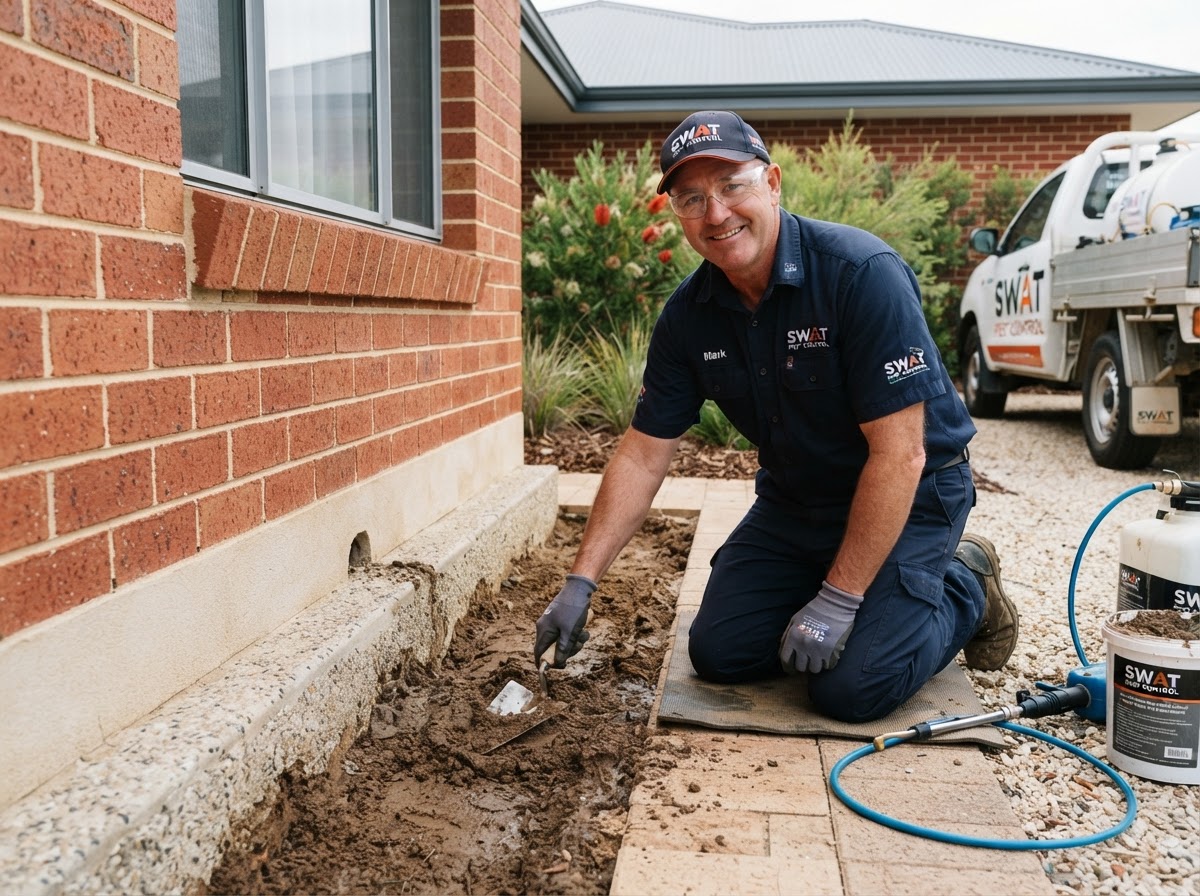
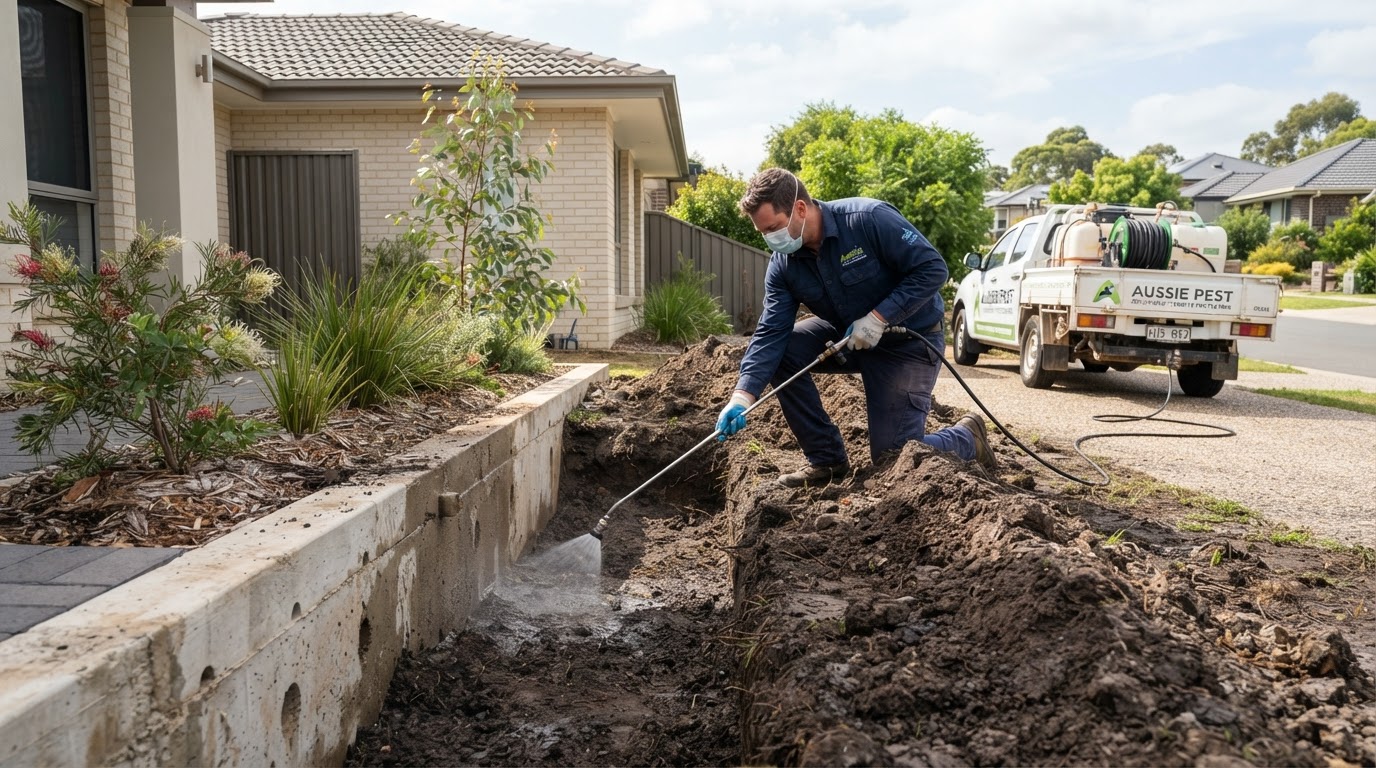
A chemical barrier is created by applying a professional-grade termiticide to the soil around and beneath a structure, forming a protective treated zone. Termites attempting to pass through the barrier pick up the active ingredient and carry it back to the colony. Barriers are well suited to slab-on-ground construction common across Perth and provide continuous protection when installed correctly.
In-ground baiting and monitoring
Baiting systems use discreet stations installed in the ground around your property. When foraging termites find a station, they feed on the bait and carry it back to the nest, gradually eliminating the colony. Baiting is non-intrusive, easily inspected, and an excellent option where soil barriers are difficult to install — such as properties with complex landscaping, attached structures or limited access.
Which is right for your home?
- Construction type — slab homes often suit chemical barriers; complex footprints suit baiting.
- Access and landscaping — difficult soil access may favour a baiting system.
- Monitoring preference — baiting offers regular station checks and visible activity data.
- Existing activity — baiting can be particularly effective against an active colony.
Our Perth technicians assess your property and explain both options in plain language, with clear written pricing — so you can choose the protection that genuinely suits your home and budget.