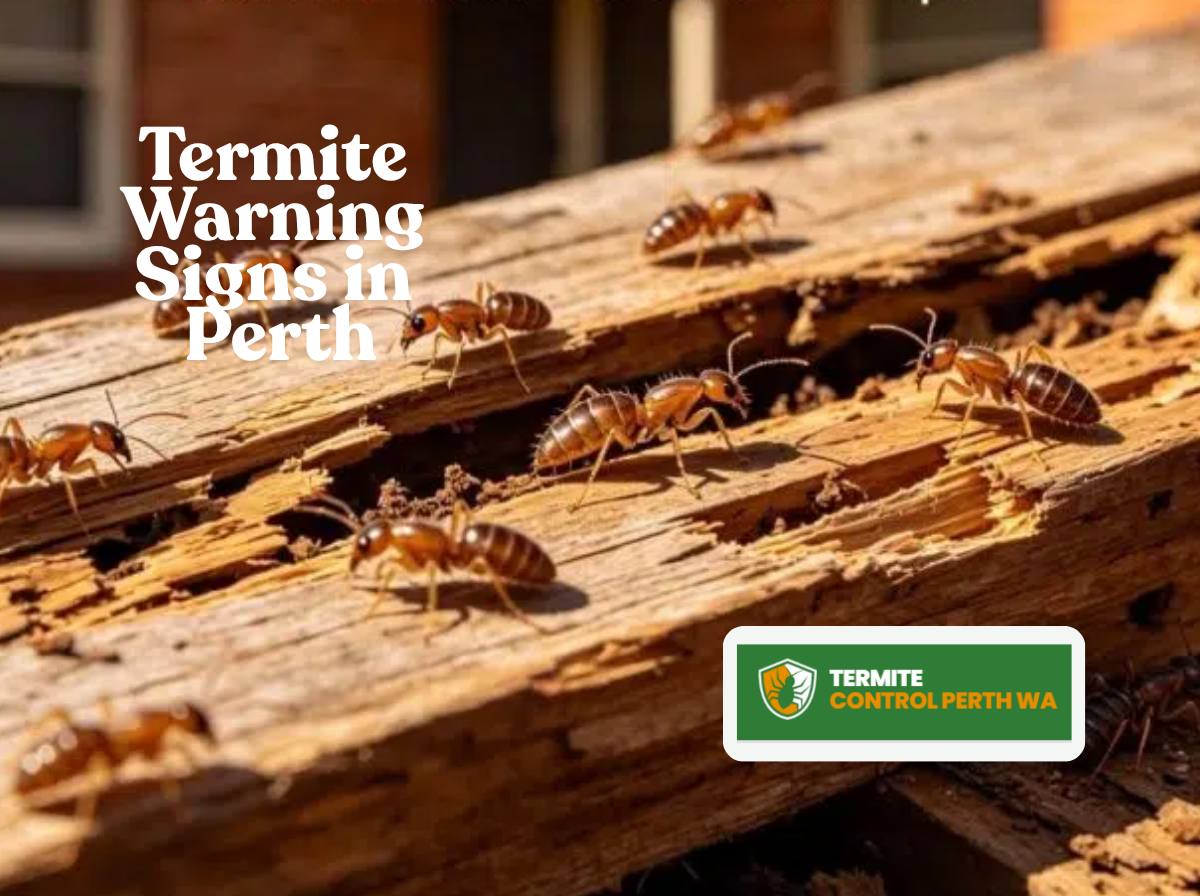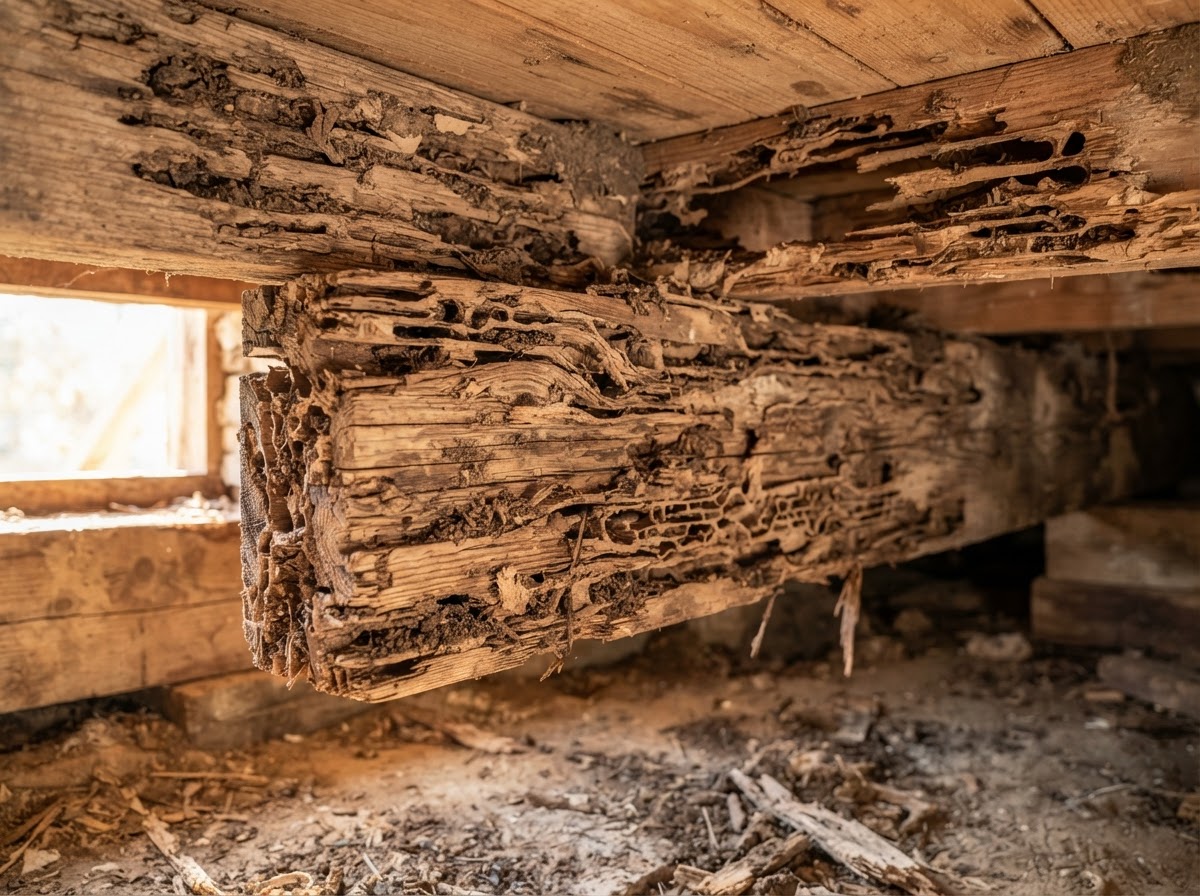
Many Perth homeowners first notice termites shortly after a stretch of warm, wet weather. There is a clear biological reason for this — and understanding it helps explain why seasonal vigilance is so important across Western Australia.
Why rain triggers termite swarms
Warm, humid conditions following rainfall are ideal for termite reproduction. Mature colonies release winged alates (the reproductive caste) that leave the nest to establish new colonies. Inside your home, you may notice these swarmers near windowsills and light fittings, often shedding their wings as they settle.
Warm, moist soil means active foraging
Subterranean termites rely on moist soil to maintain their shelter tubes and protect themselves from drying out. After rain, when the ground is damp and temperatures rise, foraging becomes far more aggressive — and worker termites travel further and faster in search of new timber food sources, including the structural timbers in your home.
Protecting your home this season
- Book a pre-season inspection before swarming peaks in spring and summer.
- Keep soil levels below the damp-course and maintain clearance around timber.
- Clear away stored timber, stumps and debris from against external walls.
- Fix leaking taps and drains that keep soil near your home consistently moist.
- Ensure subfloor ventilation is clear and working as intended.
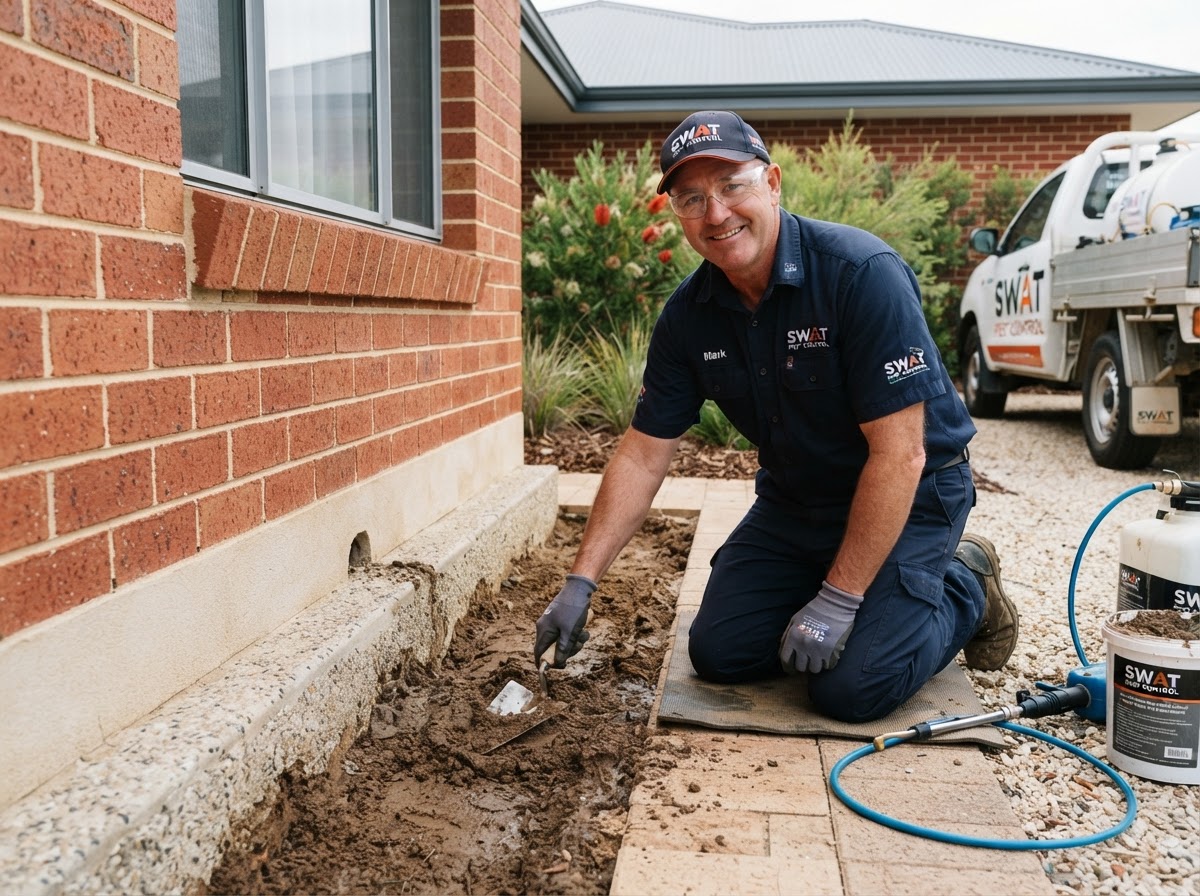
If you have seen flying termites or mud tubes after recent rain, contact our Perth team for a prompt assessment — early action prevents the colony from establishing inside your home.